Brandy Sangaree
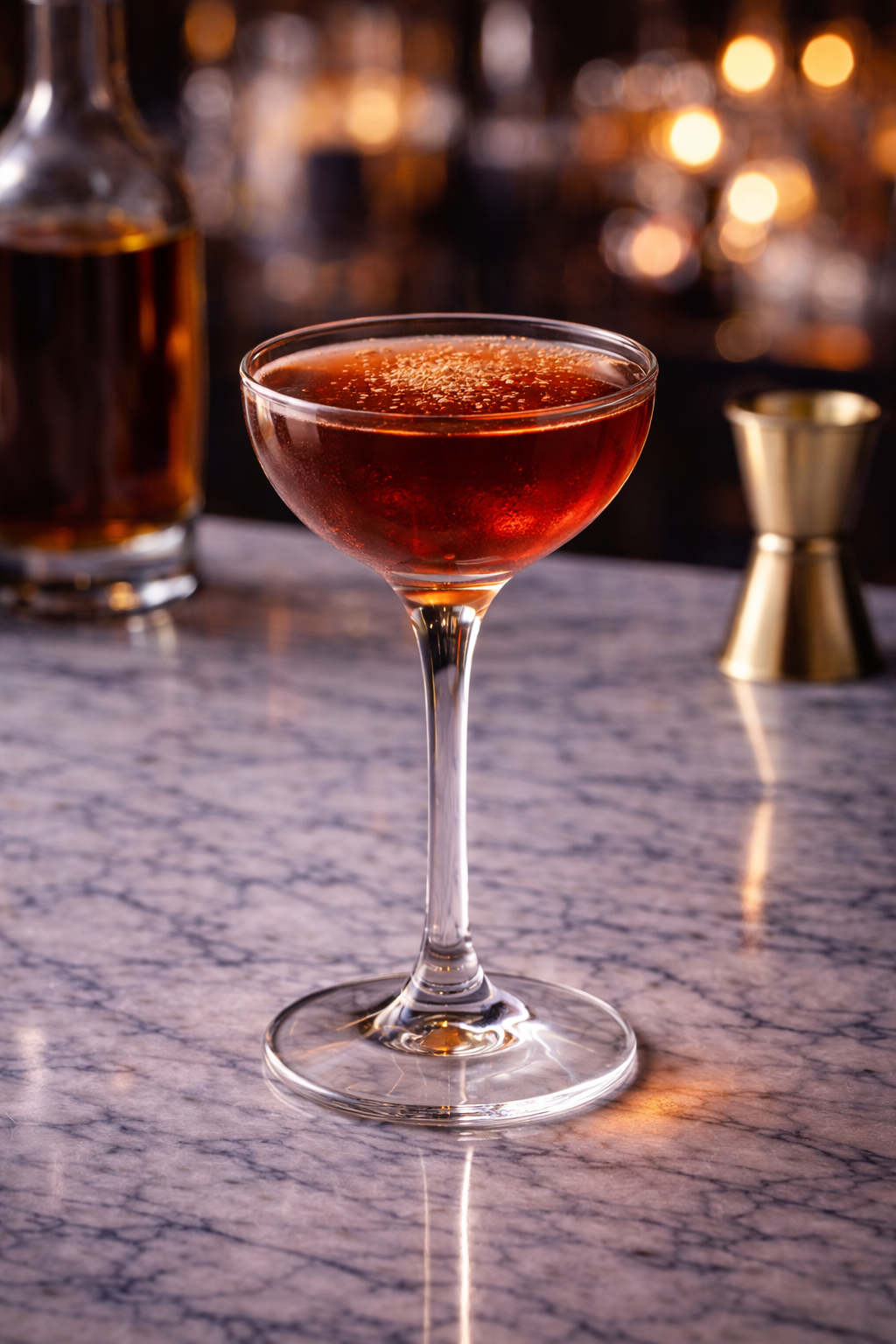
Brandy Sangaree: A Colonial-Era Cocktail from 1774
The Brandy Sangaree dates to at least 1774, though its origins trace back even further to colonial taverns and punch houses.
The drink derives its name from the Spanish word "sangre" meaning blood, referencing the drink's red color when made with fortified wines. A 1736 issue of British Gentleman's Magazine noted a punch seller in London's Strand who devised a drink made with strong Madeira wine called "sangre." The sangaree evolved from this wine-based punch popular throughout western Europe and the American colonies. By the 1780s, sangaree had become widespread in British and American taverns. An 1837 cookbook by Miss Leslie defined it as one-third wine, ale, or porter mixed with two-thirds water, sweetened with sugar and topped with grated nutmeg. Jerry Thomas's landmark 1862 "Bon Vivant's Companion" included six sangaree variations featuring different base spirits: port wine, sherry, brandy, gin, ale, and porter. His brandy version specified sugar dissolved in water, brandy, crushed ice, and a float of port, garnished with freshly grated nutmeg. The sangaree represents a bridge between punch and individual cocktails, essentially functioning as a single-serving punch. Prohibition largely ended the sangaree's popularity, though it preceded and likely influenced the modern sangria, which dates only to 1961.
RECIPE:
½ tsp sugar
Dash of water
2 oz brandy
Port wine float
Freshly grated nutmeg
Method:
Dissolve sugar in water in mixing glass
Add brandy and fill one-third with crushed ice
Stir well and strain into rocks glass
Float port on top
Garnish with freshly grated nutmeg