GIN GIMLET
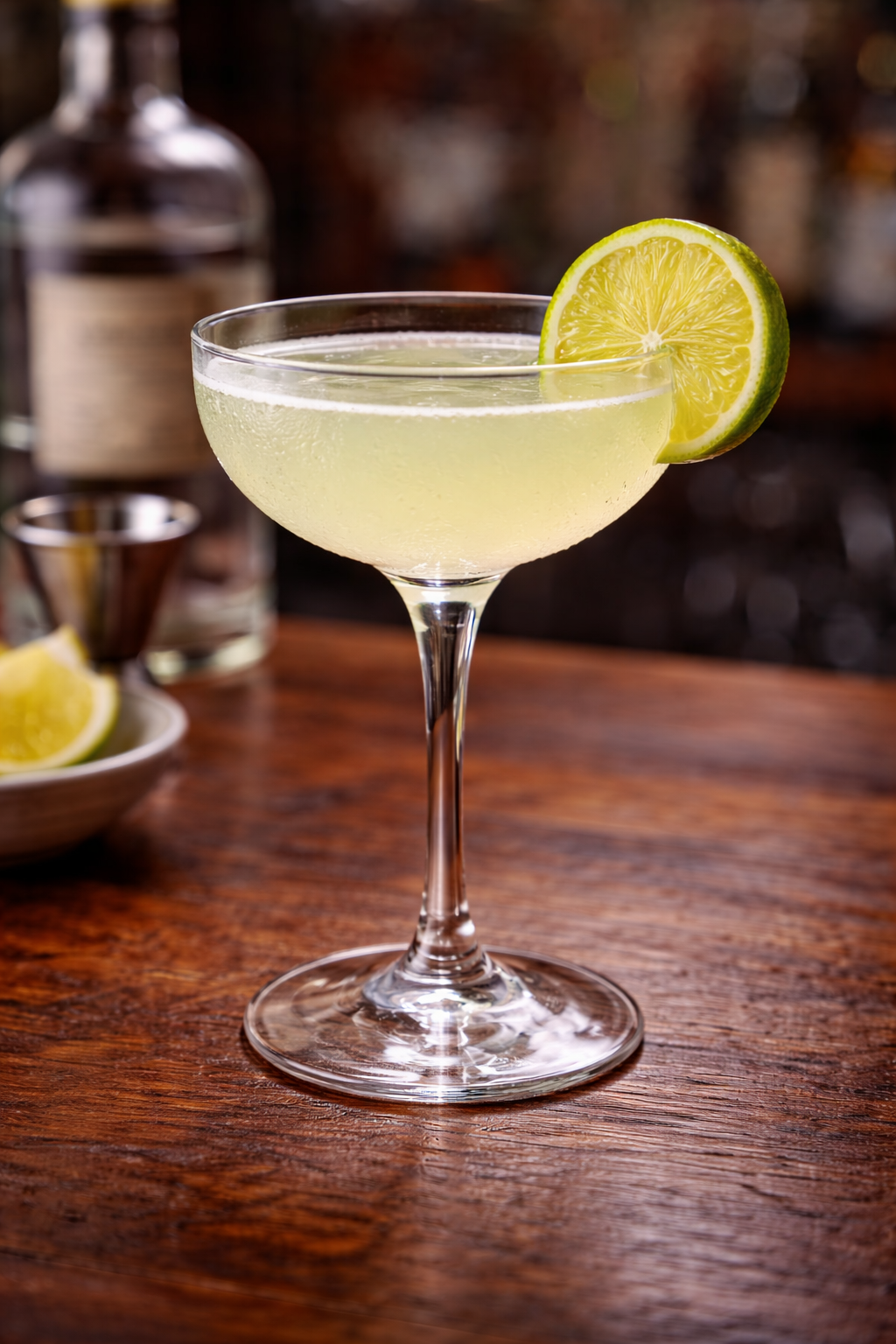
The Gin Gimlet: The British Navy's Scurvy Prevention Turned Cocktail
The Gimlet originated in the British Royal Navy around the 1860s-1880s as a way to make daily lime rations more palatable. British sailors were required to consume citrus to prevent scurvy on long voyages, and Lauchlin Rose invented a preserved lime juice cordial in 1867 that didn't require refrigeration. Naval officers began mixing this Rose's Lime Cordial with their gin rations, creating the Gimlet.
The drink is often associated with Rear-Admiral Sir Thomas Gimlette, who allegedly introduced the mixture to make the medicine of lime juice more appealing to his sailors. However, another theory suggests the name comes from the gimlet tool used to bore holes in ships, referencing the drink's sharp, penetrating taste.
The classic Gimlet uses Rose's Lime Cordial, which gives it a specific sweetness and preserved lime flavor distinct from fresh lime juice. However, modern craft bartenders often prefer making gimlets with fresh lime juice and simple syrup for a brighter, less sweet profile. Both versions have their advocates.
The Gimlet gained literary fame through Raymond Chandler's 1953 novel "The Long Goodbye," where detective Philip Marlowe's friend Terry Lennox declares "a real gimlet is half gin and half Rose's lime juice and nothing else." This cemented the drink's cultural status beyond its naval origins.
What makes the Gimlet endure is its simplicity and balance. Whether made with cordial or fresh juice, it's essentially just gin and lime in perfect proportion, stirred and served cold.
RECIPE:
2½ oz gin
¾ oz fresh lime juice
¾ oz simple syrup (Or substitute 1½ oz Rose's Lime Cordial for the lime juice and syrup)
Lime wheel for garnish
Method:
Add gin, lime juice, and simple syrup to shaker with ice
Shake well until chilled
Strain into chilled coupe glass
Garnish with lime wheel