THE GREYHOUND
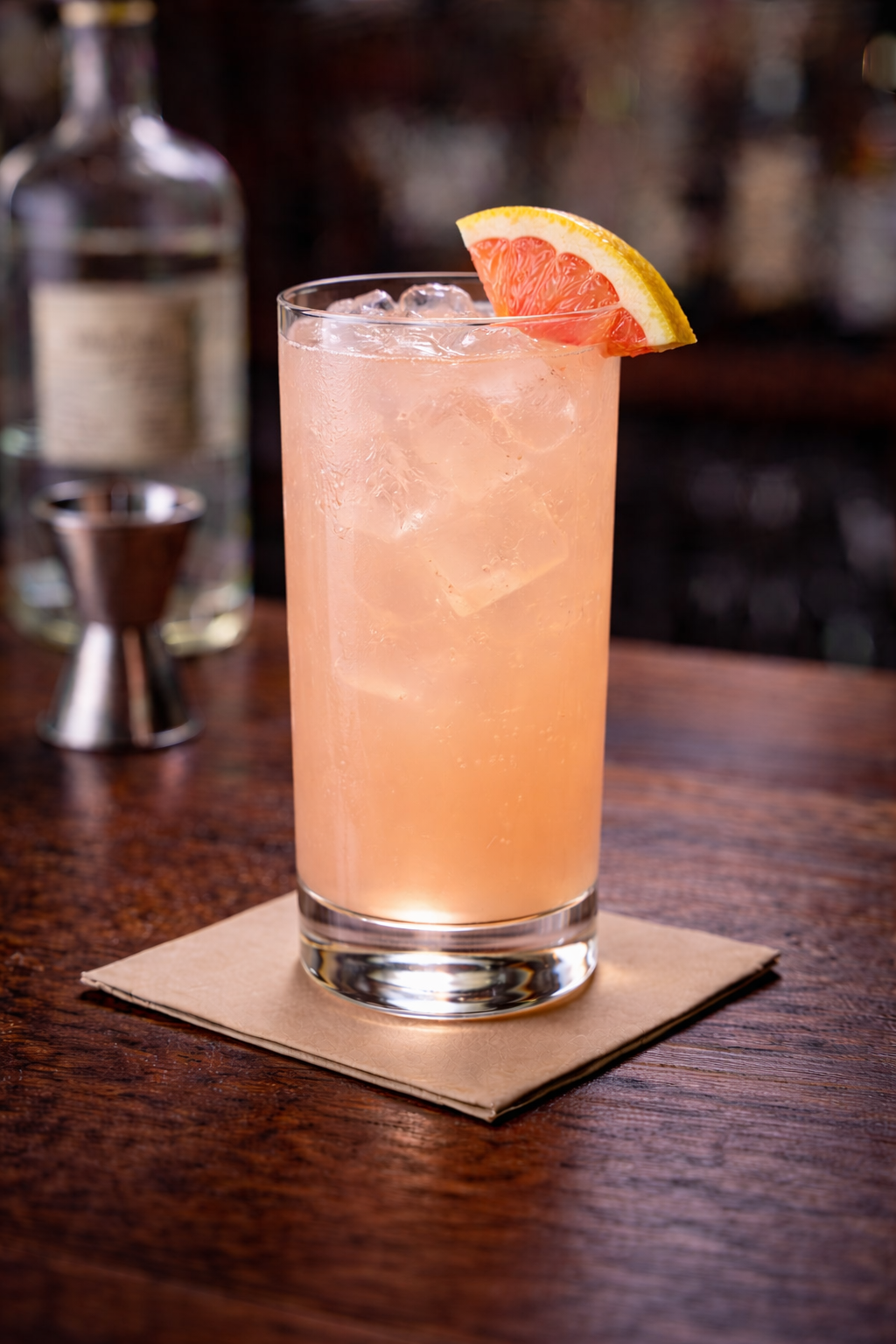
The Greyhound: The Simple Postwar Cocktail That Launched a Thousand Variations
The Greyhound first appeared in print in the 1945 book "The Gentleman's Companion" by Charles H. Baker Jr., though it likely existed earlier. The cocktail emerged during World War II or shortly after, when grapefruit juice became widely available in canned form, making it a practical cocktail ingredient for the first time.
The drink's name origin is uncertain, though some speculate it references the Greyhound bus line, which was expanding across America during the 1940s. Others suggest it simply evokes the sleek, streamlined nature of the drink itself. No definitive source confirms either theory.
What makes the Greyhound notable is its extreme simplicity - just gin and grapefruit juice over ice. This minimalism made it easy to prepare at home or in bars without specialized ingredients, contributing to its popularity in the postwar era when home entertaining became increasingly common.
The Greyhound can be made with either gin or vodka, though gin was the original spirit. The gin version allows the botanical flavors to complement the grapefruit's tartness and bitterness, while vodka creates a cleaner, more neutral profile. By the 1960s, the vodka version became more popular as vodka consumption surged in America.
The drink's simplicity also made it a template for variations. The most famous is the Salty Dog, which adds a salted rim, but bartenders have created numerous other riffs by adding different modifiers or switching the base spirit. The basic gin-and-citrus-juice formula influenced other drinks like the Paloma, which uses tequila and grapefruit soda.
The Greyhound remains popular as a straightforward, no-fuss cocktail that showcases quality ingredients without complication.
RECIPE:
2 oz gin (or vodka)
4-5 oz fresh grapefruit juice
Grapefruit wedge for garnish (optional)
Method:
Fill highball glass with ice
Add gin
Top with grapefruit juice
Stir gently to combine
Garnish with grapefruit wedge if desired