Building Drinks in Order: Why Spirits Go in Last
The order you add ingredients to a shaker or mixing glass isn't arbitrary—it affects both accuracy and the final product. The standard rule is simple: spirits go in last.
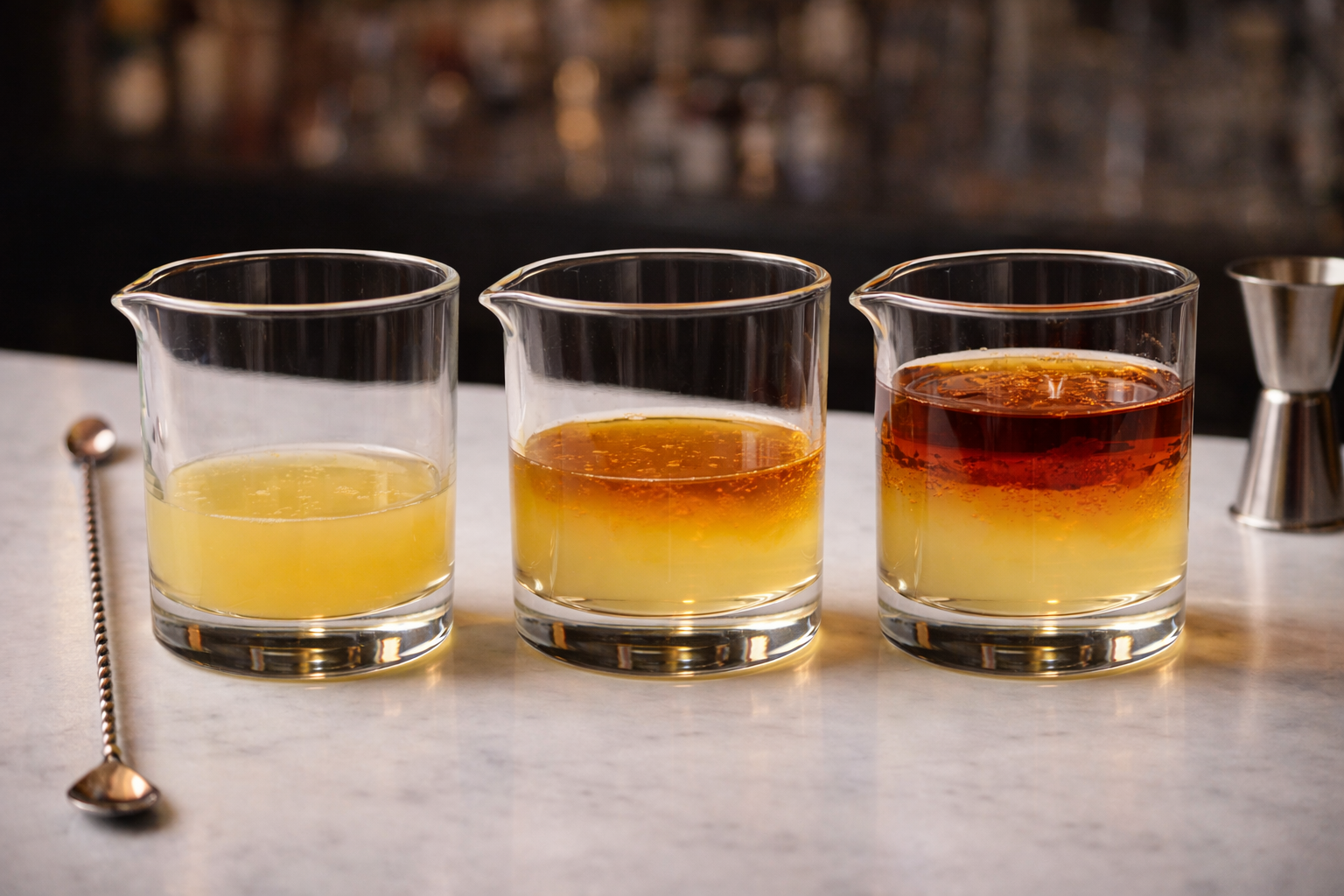
Start with citrus and other juices, then syrups and modifiers, then spirits. This sequence matters for multiple reasons. First, if you screw up a measurement on an inexpensive ingredient like lime juice or simple syrup, you haven't wasted expensive spirits. You can dump it and start over without throwing away $3 worth of gin.
Second, spirits are the most important component of the drink's flavor profile. Adding them last means they're on top when you start shaking or stirring, which helps ensure they're fully incorporated. If you add spirits first and then pile other ingredients on top, you risk inadequate mixing, especially with denser ingredients like syrups that sink.
For layered or built drinks served in the glass, the principle shifts slightly. You're often building heaviest to lightest to create natural separation, though ice goes in first to chill the glass.
There's also a practical efficiency component. In high-volume service, you can batch-prepare juice and modifier portions for common drinks, then add spirits when ordered. This shaves seconds off each ticket.
This isn't superstition or ritual—it's practical technique that improves consistency and reduces waste. Follow the sequence on every drink and you'll notice better results.