Proper Muddling: Why You're Probably Bruising Your Mint
Most bartenders muddle like they're angry at the mint. That's the problem. Aggressive muddling releases chlorophyll and breaks down plant cell walls, making drinks bitter and grassy instead of aromatic.
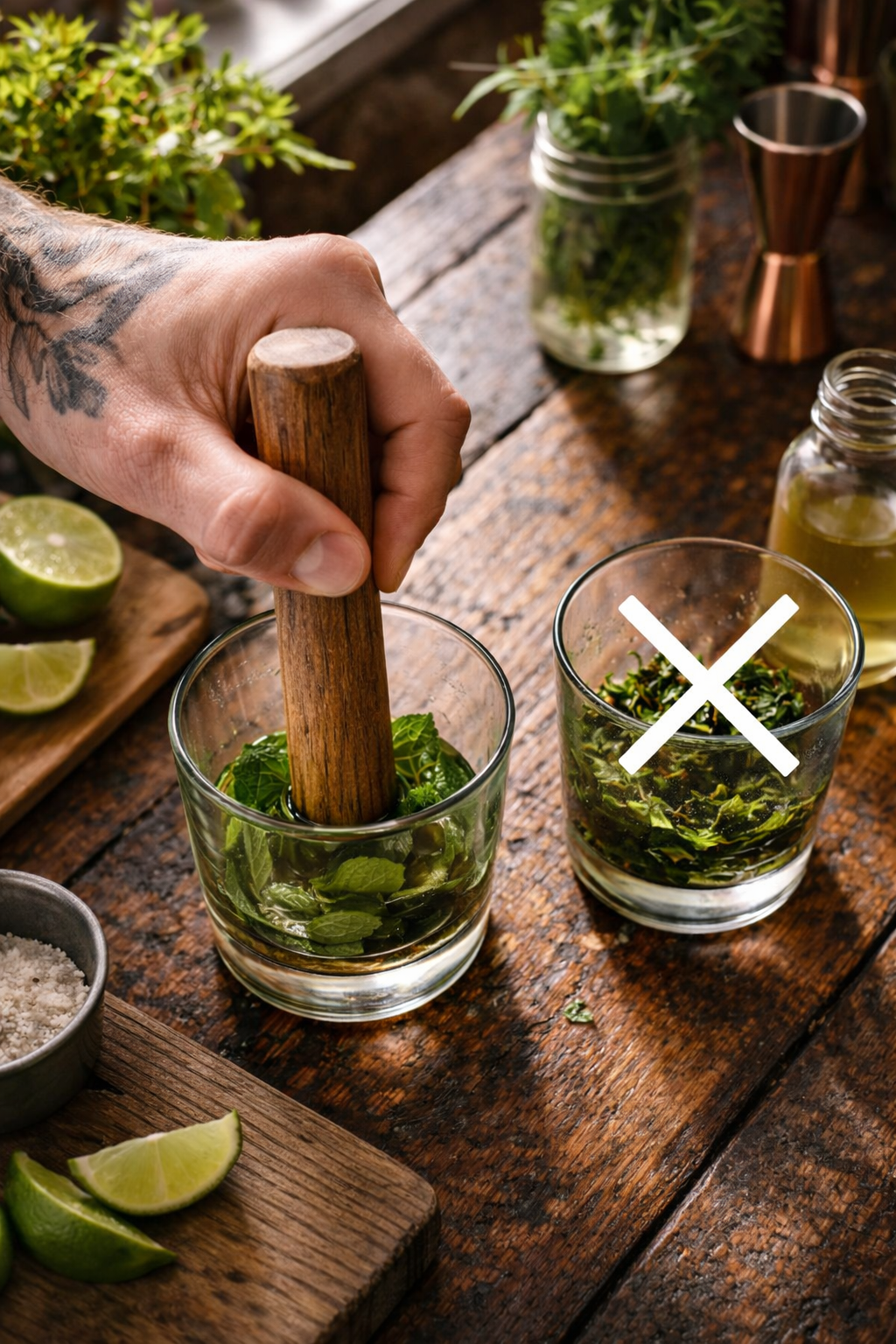
For herbs like mint and basil, you're trying to extract essential oils from the surface of the leaves, not pulverize them into mush. Place the herbs in the glass, add a small amount of simple syrup or sugar (which provides friction), then press and twist gently. Two or three gentle presses are sufficient. You should see the leaves darken slightly as oils release, but they should remain largely intact.
For citrus and harder ingredients like ginger, you can apply more pressure because you're actually trying to break down structure and extract juice. But even then, controlled pressure works better than violent mashing.
The muddler itself matters. Wooden muddlers are traditional and work well. Avoid metal muddlers with teeth or aggressive textures—they're designed to destroy ingredients, which is rarely what you want. A flat or slightly textured wooden end provides adequate friction without excessive damage.
This technique is crucial for Mojitos, Mint Juleps, and any cocktail featuring fresh herbs. The difference between a properly muddled Mojito and an over-muddled one is the difference between refreshing and undrinkable. If your herb-based cocktails taste bitter or overly vegetal, you're muddling too hard.