Why Some Bottles Don't Belong in the Freezer
Spirit storage temperature affects flavor, texture, and how ingredients perform in cocktails. Not all bottles benefit from freezing, and some actively suffer from it.
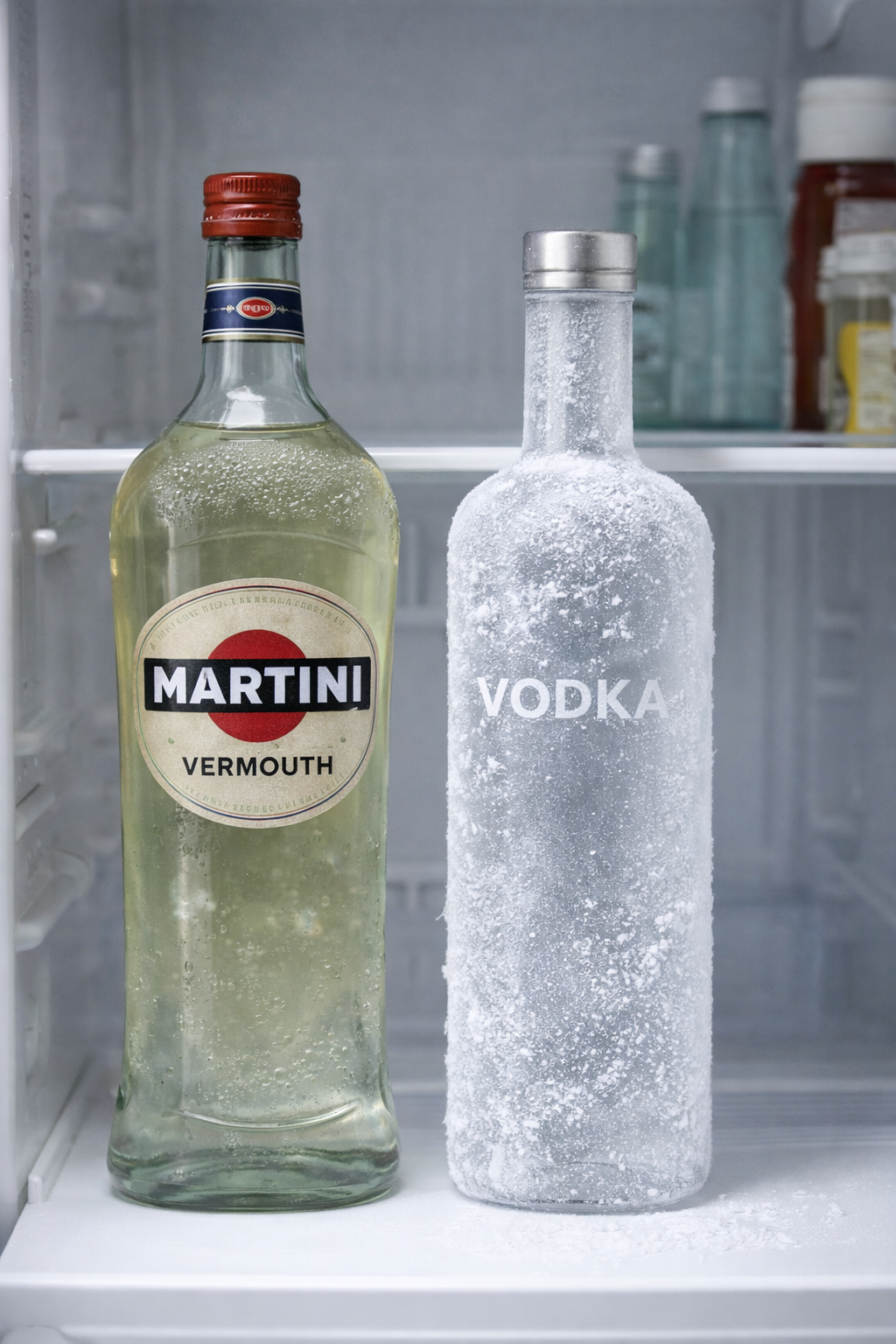
Vodka is the classic freezer spirit because it's designed to be neutral and smooth. Freezing thickens the texture slightly and makes it easier to drink straight, which is why many people prefer ice-cold vodka for shots or neat pours. It doesn't harm vodka because there's minimal flavor to suppress. If you're making vodka martinis or serving vodka neat, freezer storage works fine.
Gin should not be stored in the freezer despite being a clear spirit. Gin's entire point is botanical aromatics—juniper, citrus, herbs, spices. Extreme cold suppresses these aromatics and makes gin taste muted and flat. Room temperature gin smells and tastes dramatically better than frozen gin. Even if you're making a cold Martini, you want room-temperature gin that gets chilled through stirring with ice, not pre-frozen gin that can't release its aromatics.
Whiskey, rum, tequila, mezcal, and other aged spirits should never be frozen. These spirits develop complex flavors through aging—vanilla, caramel, smoke, fruit, spice. Cold temperatures suppress these flavors and make the spirit taste one-dimensional. A good bourbon at room temperature reveals layers of flavor that completely disappear when the same bourbon is chilled. You're paying for complexity; don't freeze it away.
Liqueurs are mixed. Cream liqueurs like Baileys benefit from cold storage for texture and preservation, though they don't need to be frozen—refrigeration is sufficient. Herbal liqueurs like Chartreuse or Fernet should stay at room temperature so their complex botanical flavors remain accessible. Sweet liqueurs like triple sec can go either way, though room temperature preserves flavor better.
Vermouth and fortified wines need refrigeration once opened because they oxidize like wine, but they shouldn't be frozen. Cold storage preserves freshness without suppressing flavor.
The principle is simple: spirits with complex flavors should be stored at room temperature so those flavors remain accessible. Neutral spirits or those meant for ice-cold consumption can be frozen. When making cocktails, you achieve proper temperature through ice and technique, not by pre-freezing ingredients that lose flavor in the process.
If you're building a home bar, invest in a wine fridge for vermouth storage and keep most spirits at room temperature on shelves away from direct sunlight. Reserve freezer space for vodka if you drink it neat, but leave everything else out where its flavors can develop properly.