MARTINI
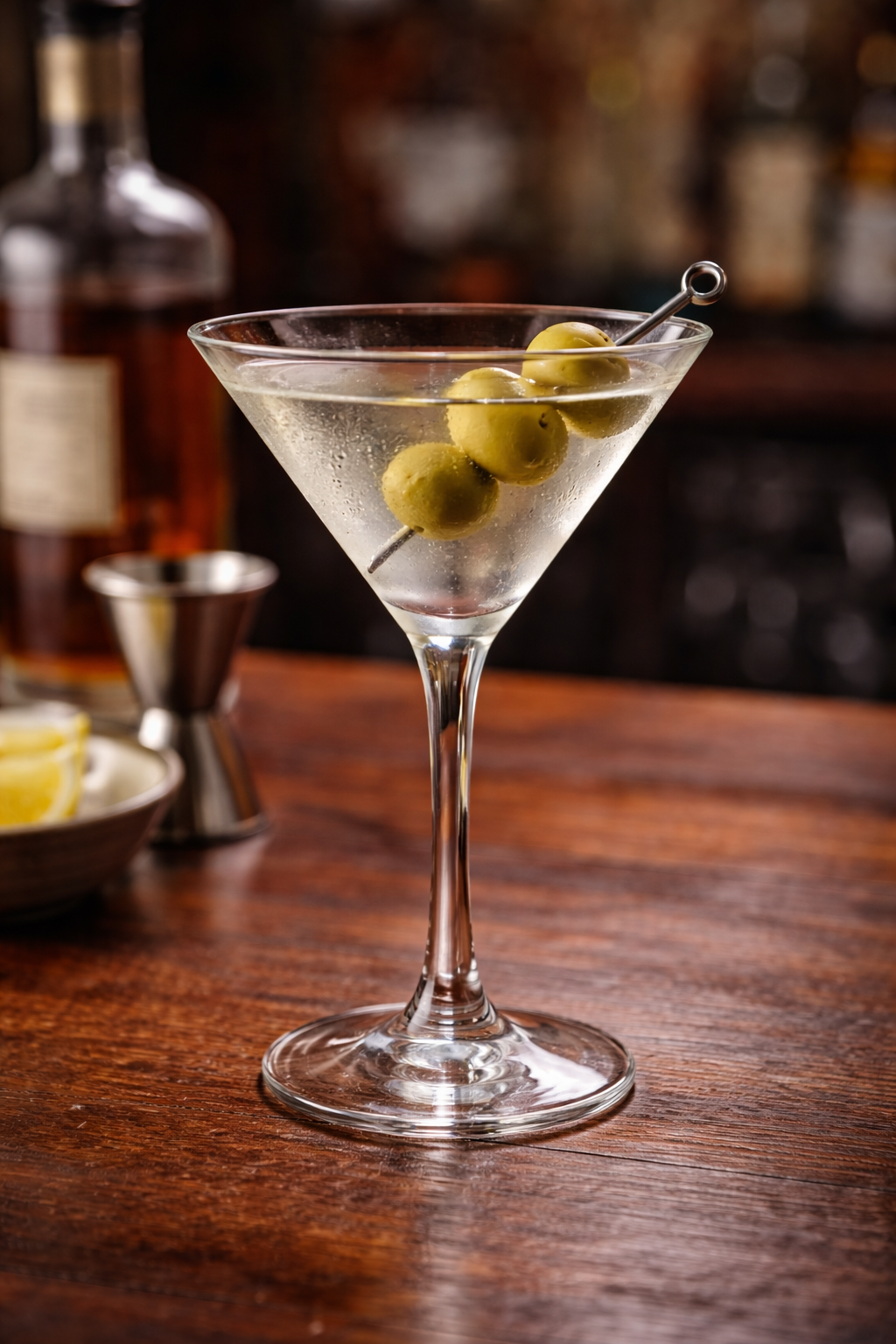
The Martini: The Cocktail That Defined an Era
The Martini's exact origin is disputed, with several theories pointing to different bartenders in the 1880s. Some credit Jerry Thomas, who published a "Martinez" recipe in his 1887 bartending guide, while others attribute it to a bartender in Martinez, California. Another story credits Italian vermouth maker Martini & Rossi, though this is likely coincidental.
What's clear is that by the 1890s, the Martini had evolved into something close to its modern form. Early versions were much wetter, using equal parts gin and vermouth, and sometimes included orange bitters and maraschino liqueur. Over the 20th century, the drink became progressively drier as Americans developed a taste for less vermouth.
The Martini gained cultural significance during the mid-20th century, becoming associated with sophistication, business culture, and figures like James Bond. The drink's simplicity means quality ingredients and proper technique are essential. Stirring rather than shaking keeps the drink clear and silky.
The ratio of gin or vodka to vermouth is a matter of personal preference, ranging from the classic 2:1 to extremely dry versions that barely whisper vermouth over the gin. The garnish choice between olive and lemon twist also sparks debate among Martini drinkers.
RECIPE:
2½ oz gin or vodka
½ oz dry vermouth
Lemon twist or olive for garnish
Method:
Add gin and vermouth to mixing glass with ice
Stir for 30 seconds until well-chilled
Strain into chilled coupe or martini glass
Garnish with lemon twist or olive