Sidecar
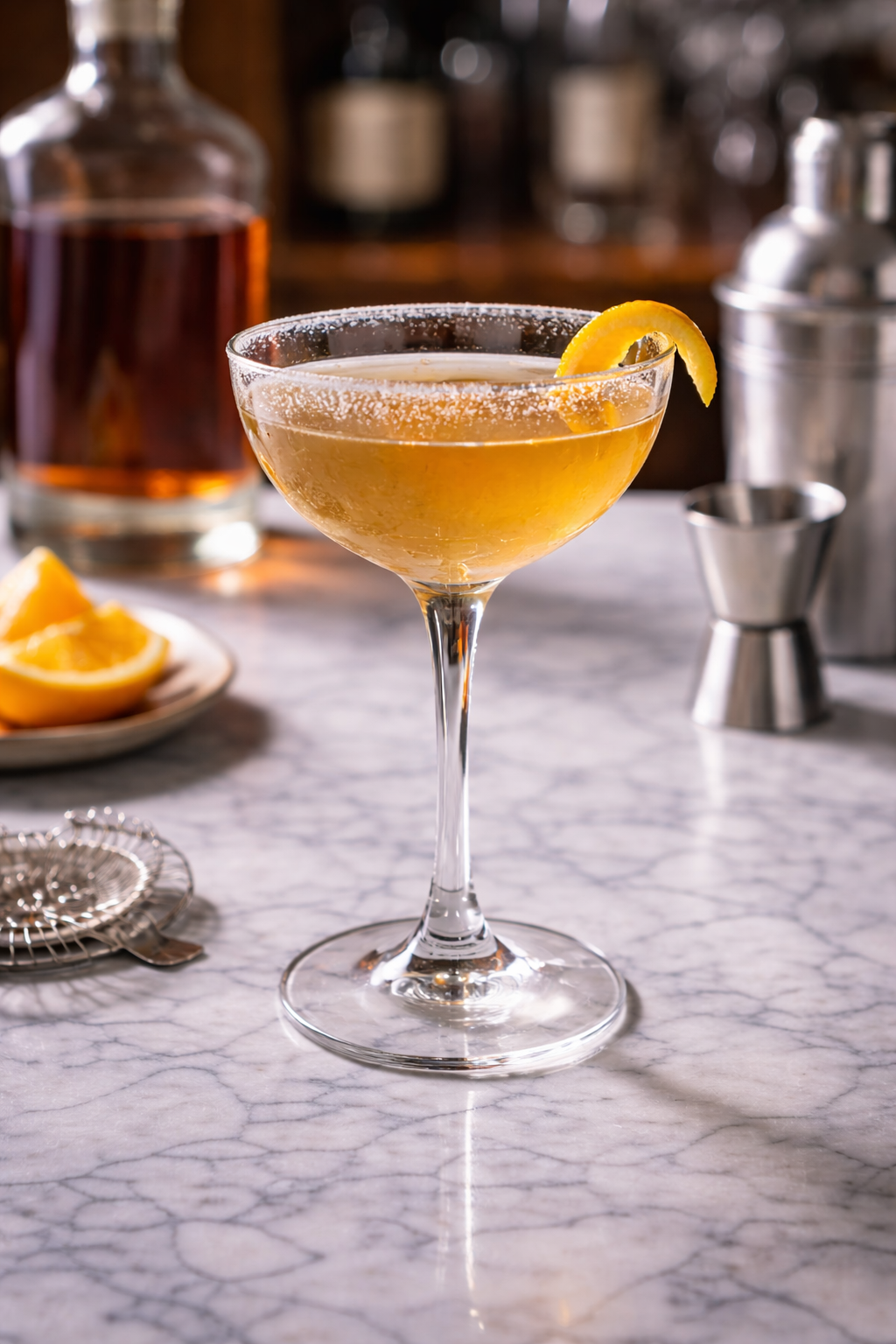
The Sidecar: The WWI Cocktail with More Origin Stories Than Ingredients
The first printed recipes for the Sidecar appeared in 1922 in both Robert Vermeire's "Cocktails and How to Mix Them" and Harry MacElhone's "Harry's ABC of Mixing Cocktails" Wikipedia. Vermeire's book stated the drink was very popular in France and was first introduced in London by MacGarry, the celebrated bartender at Buck's Club Difford's Guide.
The origin stories vary widely. In early editions of MacElhone's book, he credited Pat MacGarry as the inventor, but in later editions he credited himself Wikipedia. David Embury, in his 1948 book "The Fine Art of Mixing Drinks," credits an American army captain in Paris during World War I, saying the drink was named after the motorcycle sidecar the captain used Wikipedia. The Ritz Hotel in Paris also claims to be the birthplace.
What makes the Sidecar significant is its relationship to earlier cocktails. The drink follows the same basic formula as the Brandy Crusta, created in 1850s New Orleans by Joseph Santini, using cognac, orange liqueur, and lemon juice. The Sidecar simplified this template, removing the bitters and maraschino liqueur while keeping the essential spirit-citrus-sweetener structure.
The original recipes called for equal parts cognac, Cointreau, and lemon juice, known as "the French school." Later, an "English school" emerged using two parts cognac to one part each of Cointreau and lemon juice Wikipedia. Modern versions typically add sugar syrup for balance.
RECIPE:
2 oz cognac
¾ oz Cointreau
¾ oz fresh lemon juice
Sugar for rim (optional)
Orange or lemon twist for garnish
Method:
Optional: rim chilled coupe glass with sugar
Add cognac, Cointreau, and lemon juice to shaker with ice
Shake well until chilled
Strain into prepared coupe glass
Garnish with orange or lemon twist