NEW YORK SOUR
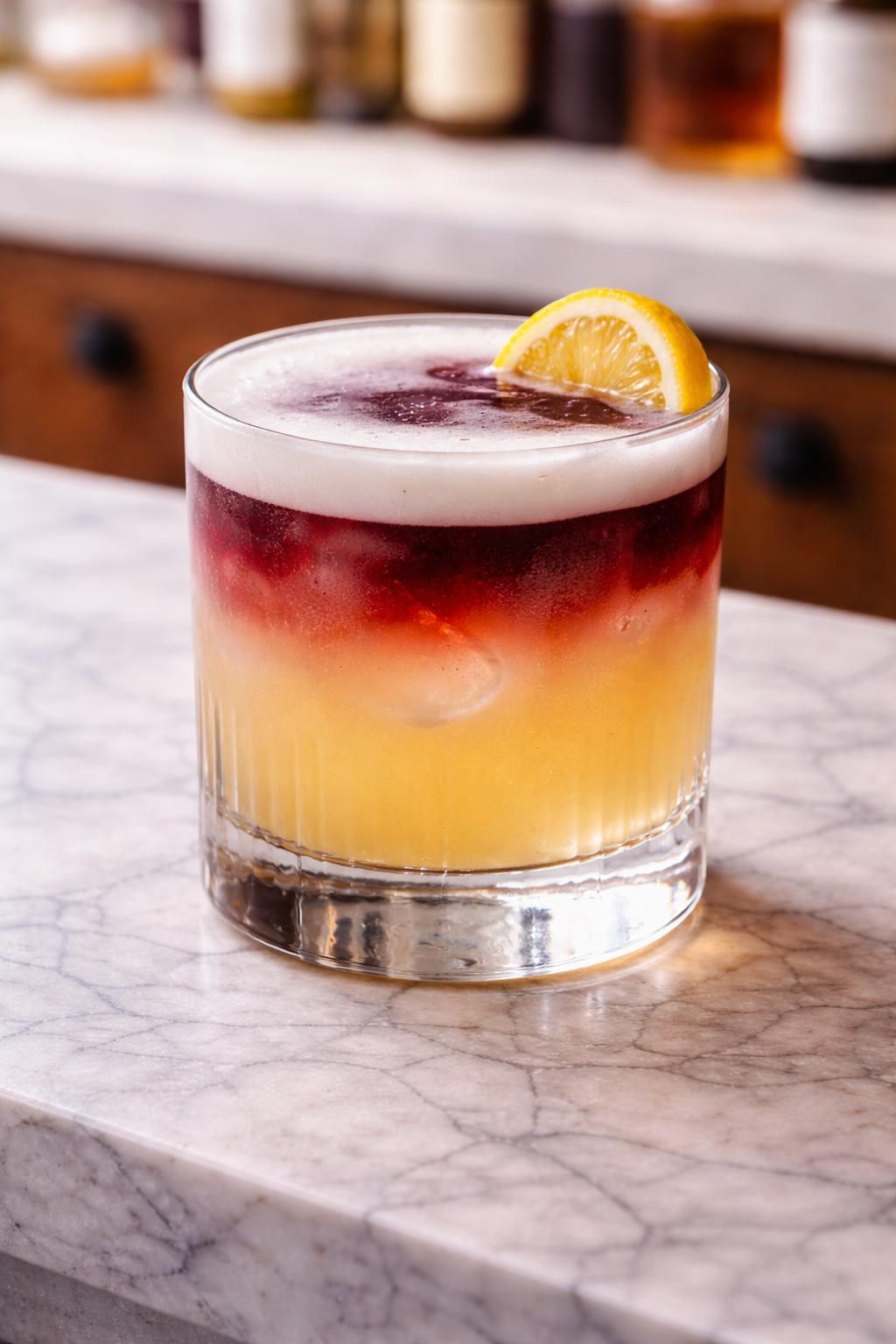
The New York Sour: A Continental Twist on the Whiskey Sour
The New York Sour appears in bartending literature from the late 1800s, though its exact origins remain debated. The drink was originally called the Continental Sour or Southern Whiskey Sour before becoming known as the New York Sour, according to Liquor.com.
The earliest known printed recipe appeared in an 1880s bartending manual, establishing it as one of the older whiskey sour variations. The cocktail's defining feature is the red wine float, traditionally made with a dry red wine like Cabernet Sauvignon or Malbec. The wine sits on top of the shaken whiskey sour, creating a visual gradient from golden yellow to deep red. This technique likely came from European bartending traditions where wine and spirits were frequently combined, as noted in Difford's Guide.
The name "New York Sour" became standard in the early 20th century, possibly referring to New York's cosmopolitan cocktail culture or the city's embrace of European drinking customs. Some historians suggest the wine float was added to mask the harsh taste of lower-quality whiskey during certain periods.
The New York Sour experienced renewed popularity during the craft cocktail revival, appreciated for its elegant presentation and the way the wine's tannins complement the whiskey's character while adding depth to the citrus and sweetness.
RECIPE:
2 oz bourbon or rye whiskey
1 oz fresh lemon juice
3/4 oz simple syrup
1/2 oz dry red wine (Cabernet Sauvignon or Malbec)
Lemon wheel for garnish (optional)
Method:
Add whiskey, lemon juice, and simple syrup to a shaker with ice.
Shake until well-chilled.
Strain into a rocks glass over fresh ice.
Slowly pour the red wine over the back of a bar spoon to create a float on top.
Garnish with lemon wheel if desired.