Batching Cocktails, Pre-Mixing for Consistent High-Volume Service
Batching cocktails means pre-mixing ingredients in large quantities so you can pour individual drinks quickly during service. Done correctly, it maintains quality while dramatically increasing speed. Done incorrectly, it produces inconsistent, poorly balanced drinks.
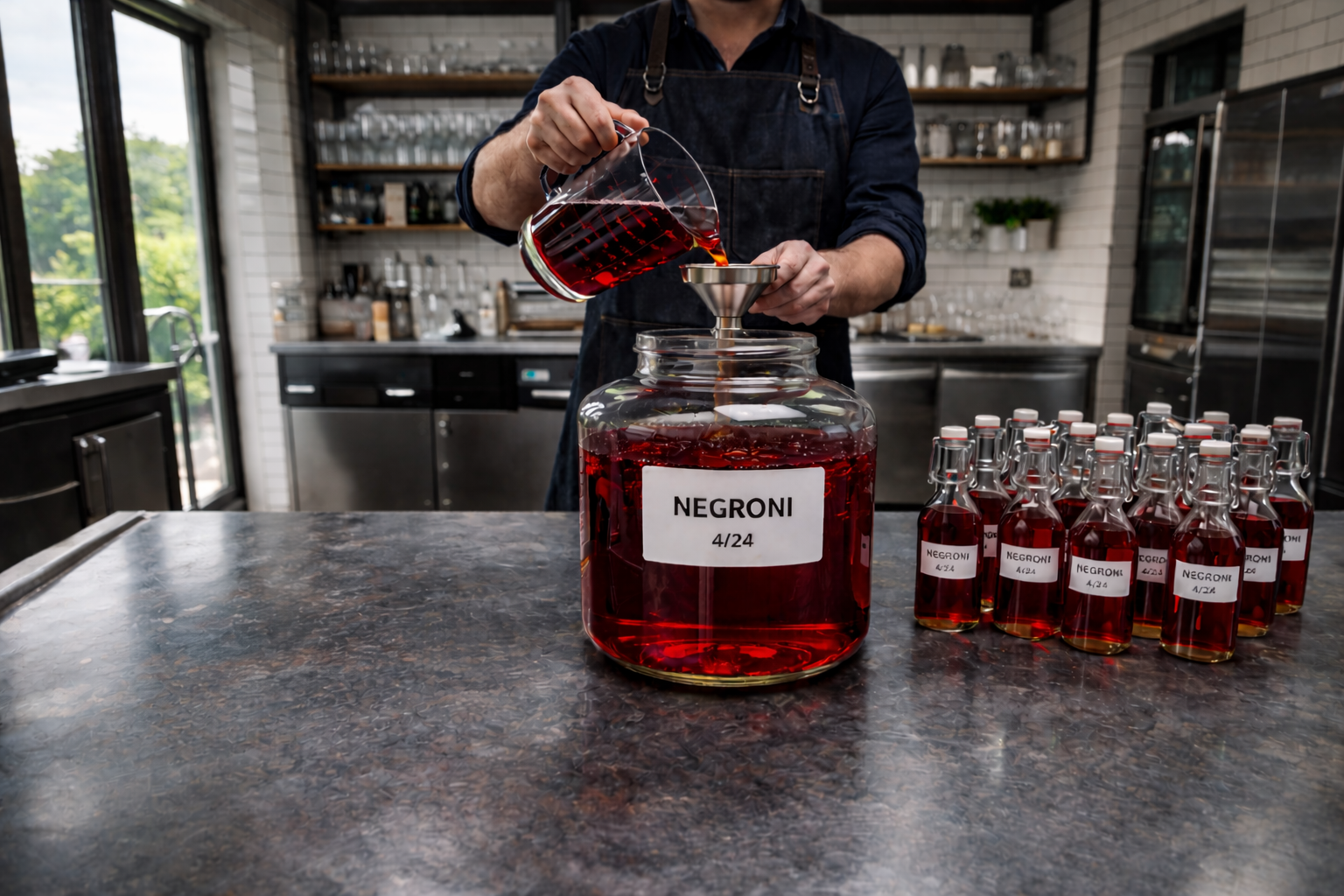
The key is understanding what to batch and what to add fresh. Spirit-forward cocktails without citrus are ideal candidates—Negronis, Manhattans, Martinis, Old Fashioneds. These contain only spirits, fortified wines, and bitters, which are all shelf-stable. You can batch them days in advance and they'll improve as ingredients marry.
Never batch citrus-forward cocktails ahead of time. Margaritas, Daiquiris, Whiskey Sours, and anything with fresh lime or lemon juice need to be made to order. Citrus juice oxidizes within hours, losing brightness and developing bitter off-flavors. There's no workaround for this—if the drink contains fresh citrus, you can't batch it more than a few hours ahead.
Scaling recipes requires math. A single Negroni is 1 ounce gin, 1 ounce Campari, 1 ounce sweet vermouth. For 10 servings, that's 10 ounces of each ingredient. Measure carefully and combine in a large container. You're building the exact same ratios, just at higher volume.
Dilution is the critical factor most people miss. When you batch a stirred cocktail like a Manhattan, you need to add water to replace the dilution that would occur during stirring. A properly stirred Manhattan adds about 0.75 ounces of water from ice melt. When batching, add this water directly to your mix. For 10 servings of Manhattan, that's 7.5 ounces of water added to your batch. Without this, the drinks taste too strong and unbalanced.
Store batched cocktails in the refrigerator or freezer depending on when you need them. Freezer storage works for same-day service and keeps drinks extremely cold—you can pour directly over ice without stirring. Refrigerator storage works for batches you'll use over several days.
Label everything with the date and contents. Batched cocktails look identical—you can't tell a Negroni from a Manhattan by appearance. Clear labeling prevents mistakes during busy service.
Batching works beautifully for events, parties, or high-volume bar shifts where you're serving the same cocktails repeatedly. It doesn't work for craft cocktail bars where every drink is different. Know your service style and batch appropriately.