Properly Storing Fresh Citrus Juice: Why Yesterday's Juice Ruins Today's Drinks
Fresh citrus juice is non-negotiable for quality cocktails, but it degrades faster than most bartenders realize. Understanding oxidation timelines and proper storage extends usable life without compromising drink quality.
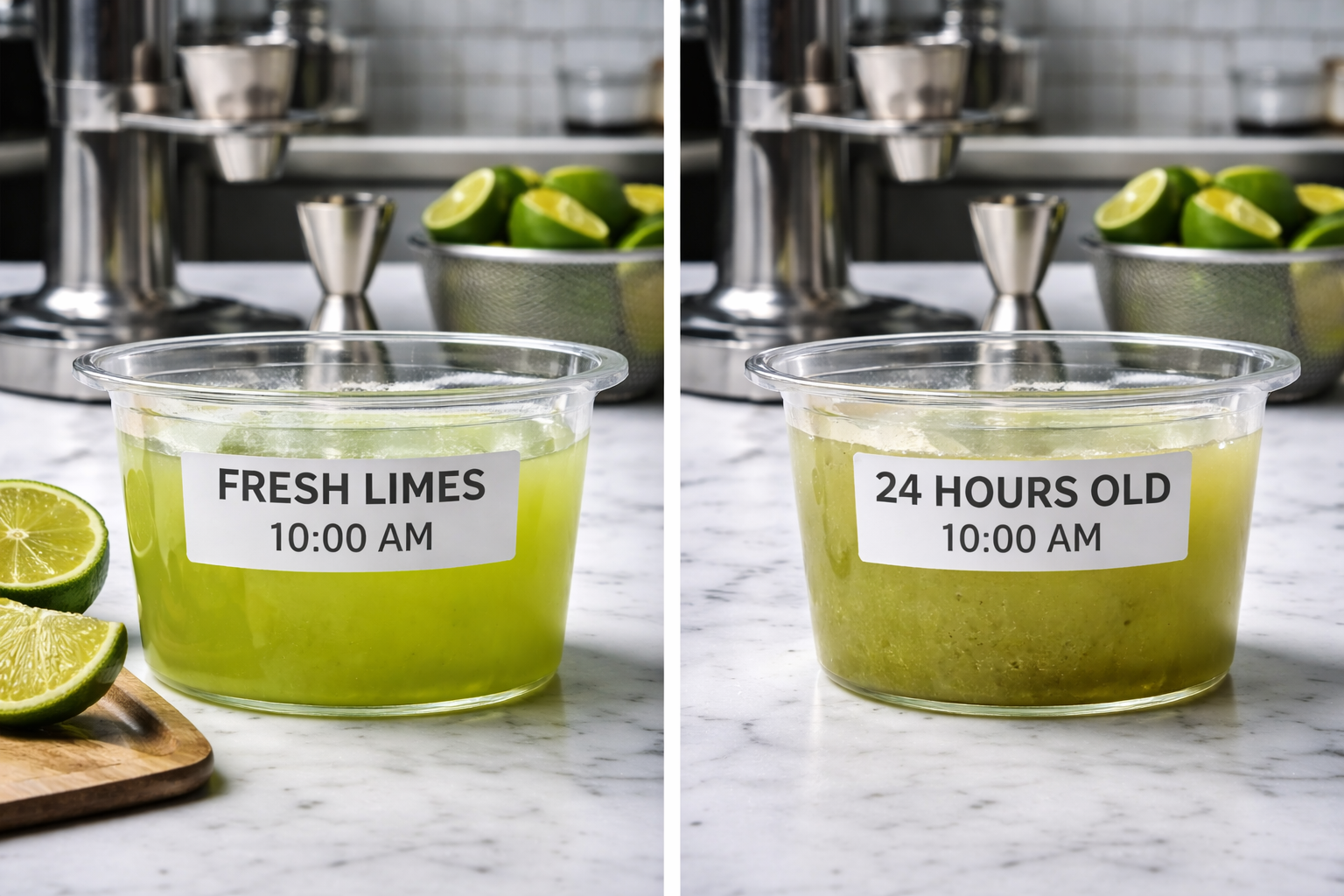
Citrus juice begins oxidizing immediately after squeezing. Oxygen exposure breaks down vitamin C and other compounds, causing color changes and flavor deterioration. Lime juice turns from bright green to dull brown. Lemon juice loses its sharp brightness and develops bitter, almost metallic notes. This happens within hours, not days.
The realistic timeline for maximum quality is 4-6 hours for lime juice and 8-12 hours for lemon juice. After that, you'll notice degradation. Grapefruit juice holds up slightly better—12-18 hours. Orange juice is most stable at 18-24 hours. These aren't hard cutoffs where juice suddenly becomes unusable, but they represent the window where juice tastes noticeably fresh.
Storage method matters. Use airtight containers that minimize air exposure. Squeeze bottles work well for service but aren't ideal for storage because every pour introduces new oxygen. For prep, use containers with minimal headspace—the less air touching the juice, the slower oxidation occurs. Glass or plastic both work, though glass doesn't absorb odors.
Temperature is critical. Store all citrus juice refrigerated at 40 degrees Fahrenheit or below. Room temperature accelerates oxidation dramatically—juice left out degrades in 1-2 hours. Even during service, keep squeeze bottles in ice wells or refrigerated areas when not actively pouring.
Some bars try to extend juice life by adding citric acid or using vacuum sealers. These help marginally but don't change the fundamental reality that fresh juice is best used quickly. If you're a high-volume bar going through gallons of lime juice daily, juice prep throughout the shift rather than doing one massive batch at opening.
Label everything with squeeze date and time. "Lime 3/15 2PM" tells you exactly how old the juice is. When juice reaches the end of its optimal window, use it for lower-stakes applications or discard it. A Margarita made with day-old lime juice tastes noticeably worse than one made with fresh juice—your customers will notice even if they can't articulate why.
The solution isn't preservatives or tricks—it's better workflow. Juice smaller batches more frequently. The extra labor is worth it for drink quality.