Using a Hawthorne Strainer: The Spring Tension Technique
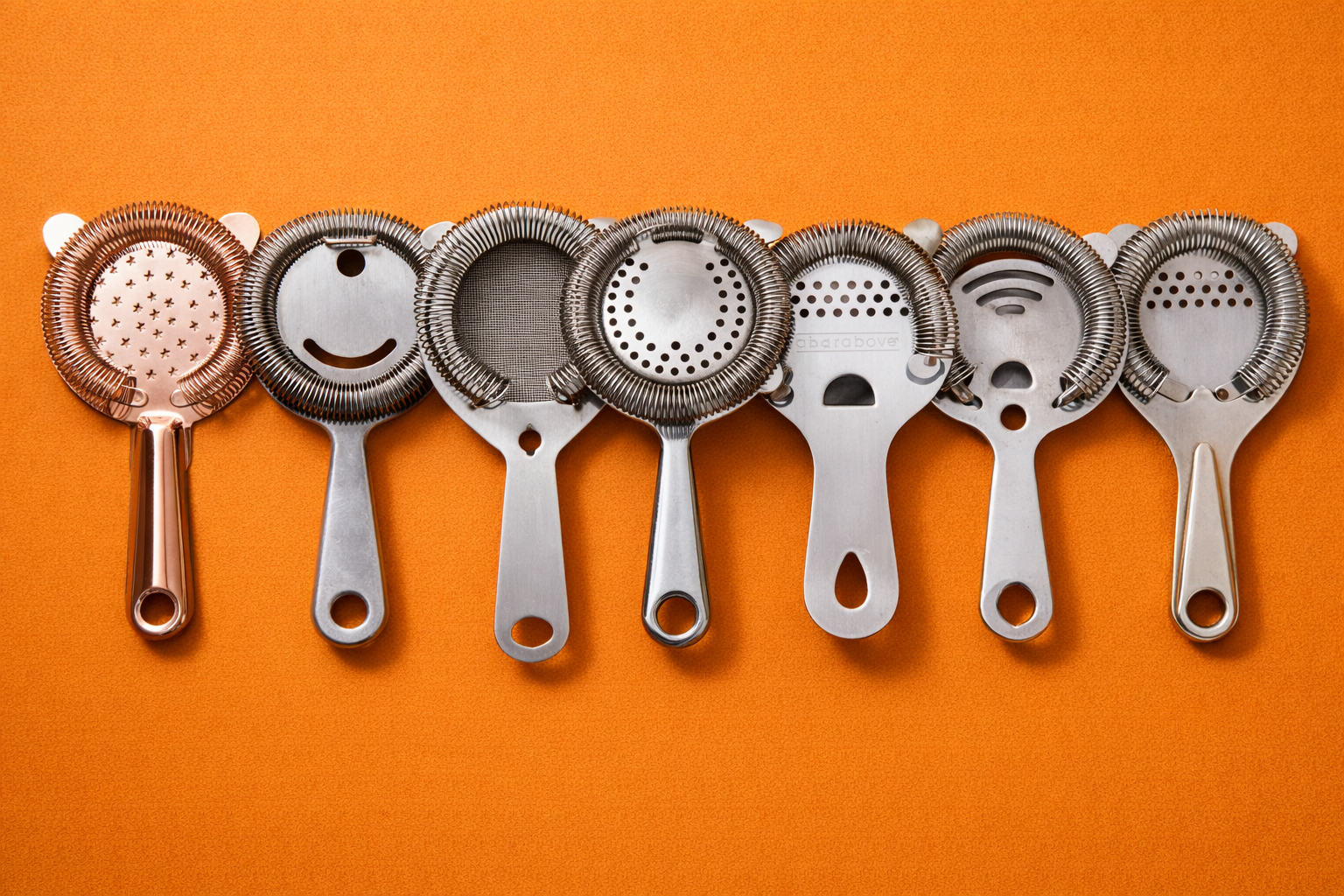
The Hawthorne strainer is the workhorse of cocktail straining, but there's more to it than just placing it on a tin and pouring. Understanding spring tension and gate control changes how your drinks turn out.
The spring coil on a Hawthorne strainer serves a specific purpose—it creates a flexible seal against the shaker tin that catches ice while allowing liquid through. How tightly you fit the strainer against the tin determines what gets through. A tight seal with the spring fully compressed catches everything including tiny ice chips. A looser seal with some spring gap allows small ice fragments through, which some drinks benefit from.
For clean cocktails where you want zero ice chips or pulp—Daiquiris, Martinis, Manhattans—fit the strainer tightly and pour steadily. The spring should be compressed against the tin creating a complete seal. If you're double straining (which you should be for these drinks), this tight seal is your first line of defense before the fine mesh strainer.
For drinks where a little texture is acceptable or even desirable—certain tiki drinks, Margaritas served on rocks—you can relax the seal slightly. Position the strainer so there's a small gap between the spring and the tin, which allows tiny ice fragments through. This isn't sloppy technique; it's intentional control over texture.
The gate is the notch in the strainer where the spring ends. Some bartenders use this as a spout for controlled pouring, others ignore it completely. Both approaches work. If you're pouring into multiple glasses from one shaker, the gate can help direct liquid flow. For single pours, it doesn't matter.
Finger placement matters for stability. Use your index finger across the top of the strainer to hold it in place while you pour. Your other fingers can grip the shaker tin for control. The strainer shouldn't shift or move during pouring—if it does, you don't have it seated properly.
Common mistakes include not fitting the strainer tightly enough (ice chips everywhere), fitting it so tightly you bend the spring permanently (damages the tool), or trying to use a Hawthorne strainer on a mixing glass (wrong tool—use a julep strainer for that).
The Hawthorne strainer is simple, but using it with intention and understanding how the spring tension affects your drinks separates competent bartending from professional technique.