Chilling Glassware: Why Temperature Matters Before You Pour
Warm glassware kills cold cocktails. A room-temperature coupe can raise a properly made Daiquiri by several degrees within seconds, which destroys the texture and makes it taste unbalanced. Chilling glasses before service is non-negotiable for quality cocktails.
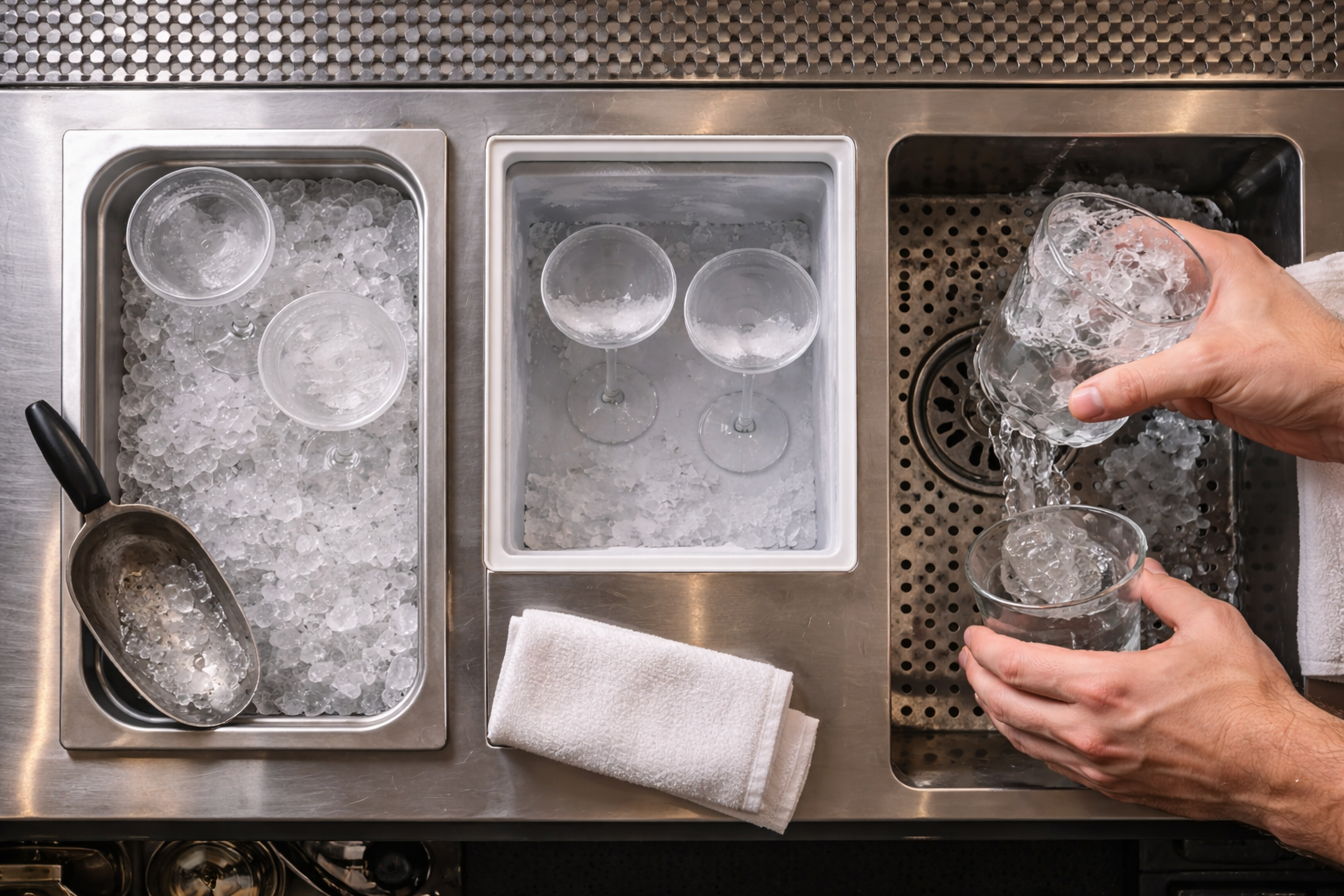
Glasses can we chilled in refrigerator, nested in ice-filled container or filled with ice water being dumped out before use.
The freezer method is ideal when you have the space and time. Store your coupes, Nick and Nora glasses, and Martini glasses in the freezer at least two hours before service. They'll develop a light frost and stay cold enough to keep cocktails at proper temperature throughout drinking. Most bars don't have freezer space for this, but if you do, use it.
The ice well method works for high-volume service. Fill a container or section of your bar well with ice and nest glassware in it. The glasses chill within five minutes and stay cold as long as they're surrounded by ice. This is how most professional bars handle glass chilling during busy shifts—it's fast, doesn't require freezer space, and you can chill multiple glasses simultaneously.
The ice water method is fastest for individual drinks. Fill the glass with ice and cold water while you're preparing the cocktail. By the time you're ready to strain, the glass is chilled. Dump the ice water, shake out excess water, and pour. This adds about ten seconds to your workflow but makes a noticeable difference in drink temperature.
Room temperature glassware is only acceptable for certain drinks. Frozen Daiquiris served in hurricane glasses are already frozen solid and less affected by glass temperature since they're consumed quickly. But classic Daiquiris served up in coupes or cocktail glasses are extremely temperature-sensitive—warm glassware immediately compromises the drink's silky texture and balanced flavor. Tiki cocktails and some tropical drinks meant for quick consumption aren't as critical. Built drinks like Old Fashioneds that you're serving over ice don't require pre-chilled glassware since the ice does the work.
But for anything served up—Martinis, Manhattans, classic Daiquiris, Margaritas, any shaken or stirred cocktail in a stemmed glass—chill the glass first. The difference in how long the drink stays cold and how it tastes is immediately obvious. Your guests might not know why their cocktail tastes better, but they'll notice it does.