Why Bar Spoons Matter for Precision
Many cocktail recipes call for very small measurements that are difficult to pour accurately from a bottle—things like one-sixth of an ounce of orgeat, a teaspoon of maraschino liqueur, or a tiny amount of absinthe. Standard jiggers typically measure in quarter-ounce increments at their smallest, which is too much volume for these precise, small additions. Bar spoon measurements give you accuracy for these amounts without guessing or trying to eyeball a splash.
A standard bar spoon holds approximately one teaspoon, which equals one-sixth of an ounce. This matters for recipes calling for "1 bar spoon" or "1 tsp" of an ingredient. Fill the spoon's bowl completely without overfilling and you have a consistent measure. Two bar spoons equal roughly one-third of an ounce, three bar spoons equal half an ounce.
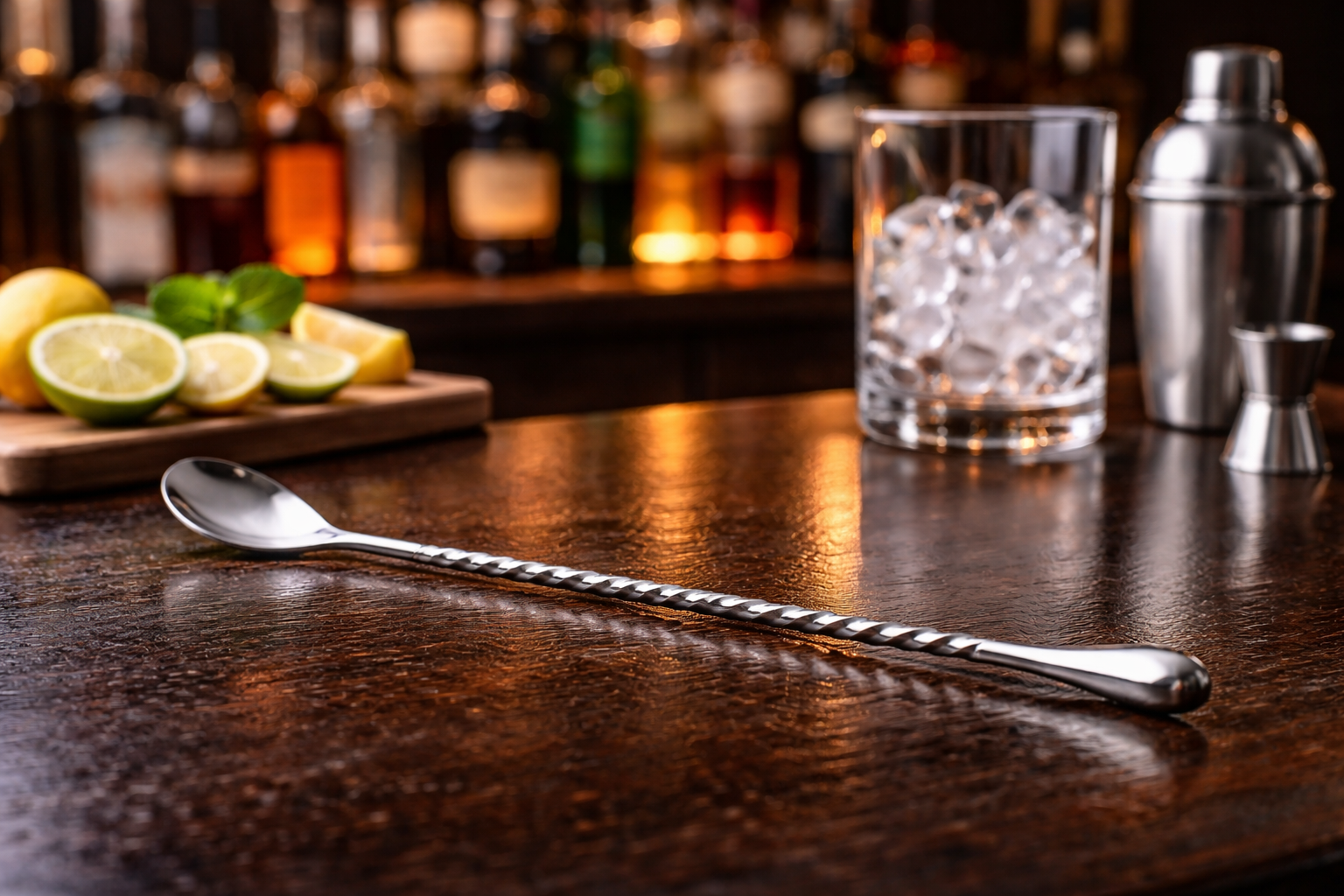
The technique requires a steady hand. Dip the spoon into your syrup or liqueur, let excess drain off for a second, then pour into your shaker or mixing glass. Don't shake the spoon or tap it—just let gravity do the work. This gives you the proper amount without waste.
For viscous ingredients like orgeat or honey syrup, the spoon method works better than trying to pour a quarter-ounce into a jigger. These thick syrups cling to measuring tools and don't pour cleanly, so the bar spoon's smaller volume is more manageable.
Some bartenders eyeball small amounts, which works once you've made the same drink a hundred times. But when you're learning a new recipe or making something that requires precision, measure it. The difference between a quarter-ounce and a half-ounce of Benedictine or maraschino liqueur is significant in a three-ounce cocktail.
Keep a dedicated bar spoon near your syrup bottles during service. It's faster than constantly washing one spoon between ingredients, and it prevents cross-contamination of flavors. Professional bars often have multiple spoons in rotation for exactly this reason.
Precision matters in cocktails. Using proper measurements for small amounts ensures consistency and produces better-balanced drinks than approximating and hoping it works out.