Tasting as You Go: Why Professional Bartenders Sip Before Serving
Tasting your cocktails before serving them is standard practice in professional bars, but most home bartenders and many professionals skip this step. It's the difference between serving drinks that are just okay and serving drinks that are properly balanced.
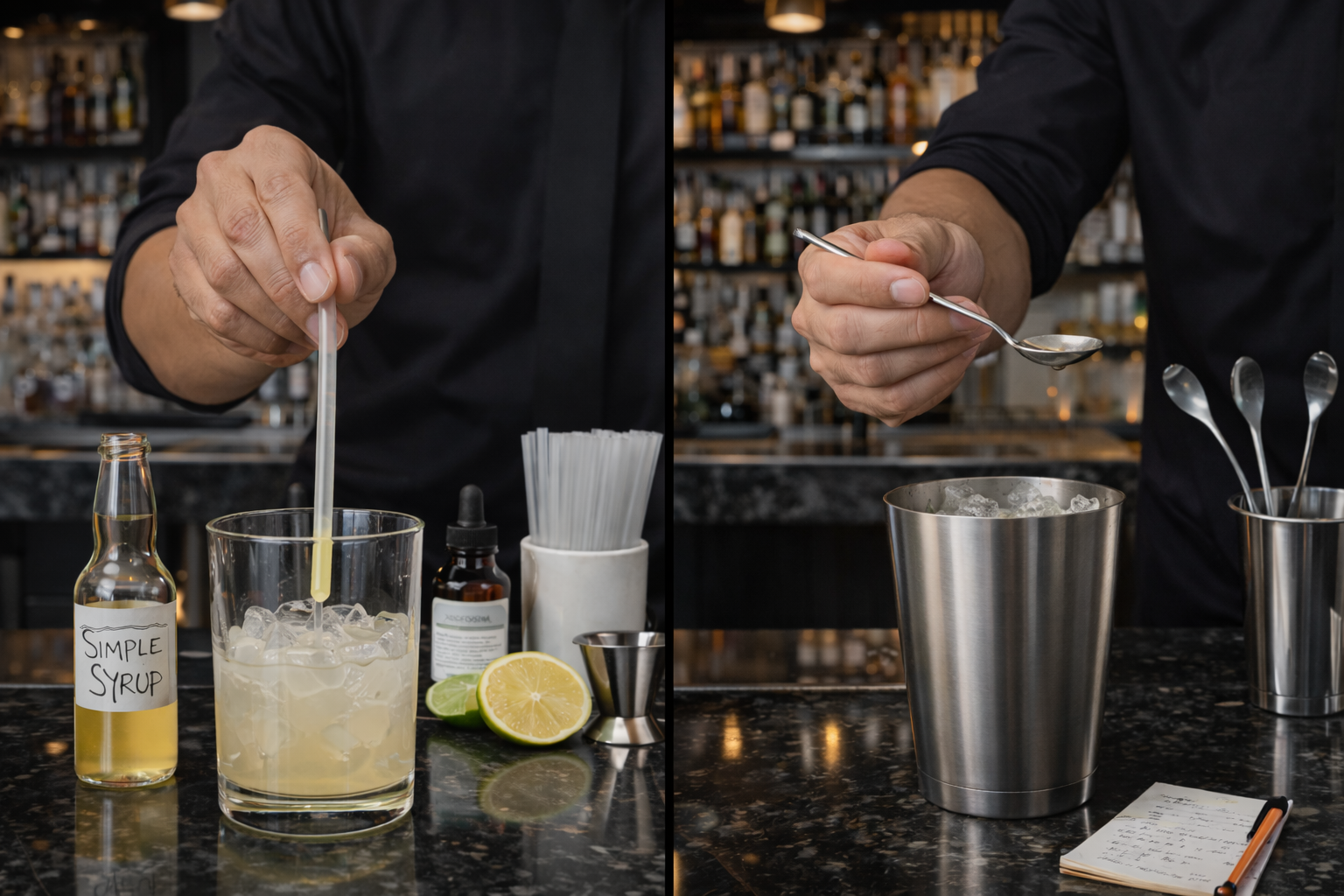
The bar spoon method is straightforward: use a clean bar spoon to extract a small sample from the shaker or mixing glass after you've mixed the drink but before you've strained it. Take just enough to coat your palate—maybe a quarter-teaspoon. Sip it, evaluate, and adjust if necessary.
The straw method is even more hygienic and works particularly well during high-volume service. Insert a clean straw into the shaker or mixing glass, place your finger over the top end to create suction, then pull the straw out with liquid trapped inside. Release a small amount onto your tongue. This technique prevents any contact between your mouth and the tasting tool, and you can discard the straw immediately after. It's faster and more sanitary than washing spoons constantly.
What are you tasting for? Balance, dilution, and overall flavor. Is the drink too sweet? Add more citrus or a few dashes of bitters. Too tart? Add a small amount of simple syrup. Not cold enough? Stir or shake longer. Too watery? You over-diluted, which you can't fix, but you'll know to adjust next time.
This matters most when you're making a drink for the first time or working with a new batch of ingredients. Fresh lime juice from one bag of limes can taste noticeably different from another bag. Your simple syrup might be slightly off in sweetness. Tasting catches these inconsistencies before the drink reaches your guest.
Whether using a spoon or straw, use a fresh one for each taste to avoid contaminating the drink. Professional bars keep multiple clean spoons and a container of straws ready during service specifically for this purpose. Never double-dip the same spoon or reuse a straw—that's unsanitary and unprofessional.
Some bartenders argue tasting wastes product or slows down service. Both are false. You're tasting a few drops, not an ounce. And catching a poorly balanced drink before it reaches the guest is faster than remaking it after they send it back.
This doesn't mean tasting every single drink during a slammed Friday night service. But when you're dialing in a recipe, training on a new cocktail, or making something you haven't made in a while, taste it. Your palate is your quality control, and using it ensures consistency.