How Prohibition Was Weaponized to Destroy Black-Owned Businesses
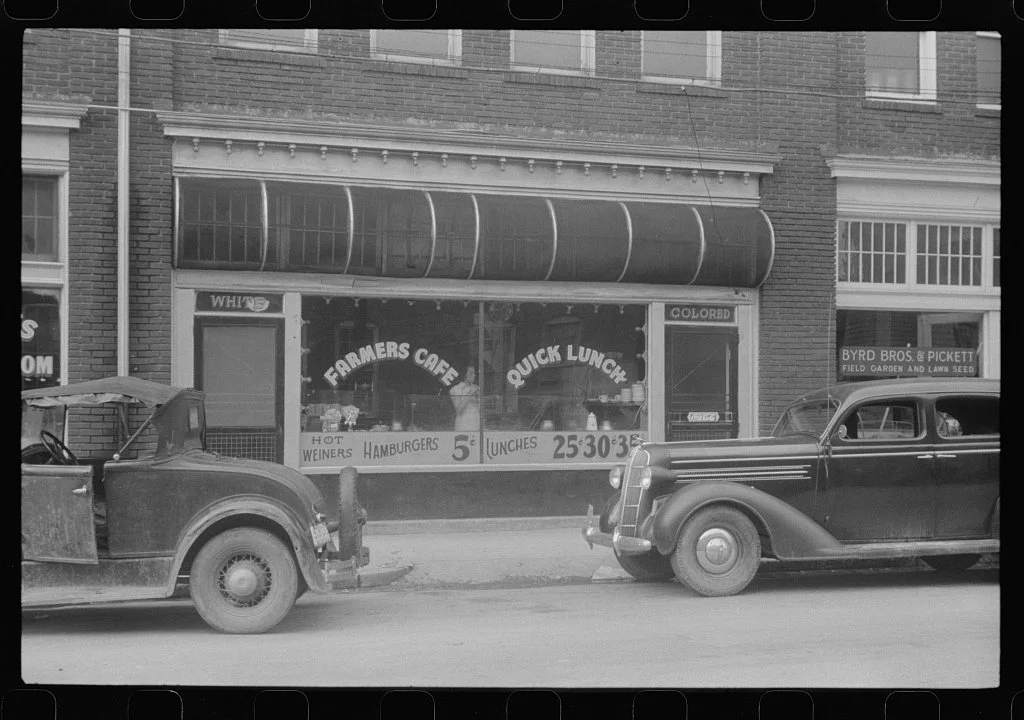
Segregated cafe near the tobacco market in Durham, North Carolina, 1940. Durham's Hayti district, a thriving Black business area, was systematically dismantled through selective Prohibition enforcement that targeted Black-owned establishments. Photo by Jack Delano, Library of Congress.
The standard narrative about Prohibition focuses on bootleggers, speakeasies, and the failure of temperance reformers to stop Americans from drinking. What's deliberately omitted from this story is how "dry laws" became one of the most effective tools for dismantling Black economic progress and destroying Black community spaces in early 20th century America.
Before Prohibition became federal law in 1920, Southern states had already spent more than a decade using alcohol regulations to target Black-owned businesses. The pattern was consistent: temperance campaigns focused public attention on Black saloons, portrayed them as threats to public safety, then used the resulting laws to shut them down while white establishments continued operating.
Black Saloons Were Economic and Political Powerhouses
To understand why Black-owned saloons became targets, you need to understand what they represented. These weren't just places to drink—they were economic anchors in Black business districts, community gathering spaces, and centers of political organizing.
Black saloons in cities like Atlanta, Memphis, Birmingham, and Durham operated as informal banks where Black workers could cash paychecks, as employment offices where newly arrived migrants could find work, and as meeting halls where Black communities organized. Many Black saloon owners were among the wealthiest members of their communities, owning the buildings that housed their businesses and renting space to other Black entrepreneurs.
This combination of economic power and community organizing made Black saloons particularly threatening to white supremacists. A prosperous Black saloon owner represented everything Jim Crow was designed to prevent: Black wealth, Black independence, and Black people gathering without white supervision.
The Atlanta Playbook: Create a Crisis, Target Black Businesses
The 1906 Atlanta Race Massacre demonstrated how effectively manufactured moral panic could be used to justify destroying Black businesses. SOURCE
White Atlanta newspapers spent months publishing fabricated stories about Black men attacking white women, explicitly blaming Black saloons for the supposed epidemic. The Atlanta Constitution and Atlanta Journal described Black-owned establishments as "dives" that displayed pornography and sold alcohol to encourage assault. None of these allegations were true, but they didn't need to be—they created the pretext for violence.
When white mobs rioted through Atlanta's Black neighborhoods in September 1906, Black saloons were primary targets. The mob specifically sought out and destroyed Black-owned businesses, particularly saloons, while leaving white-owned establishments untouched. More than twenty Black people were killed, hundreds were injured, and countless Black businesses were destroyed or permanently closed.
The aftermath was equally calculated. White Atlanta used the massacre to justify new regulations specifically targeting Black establishments. Within months, the city had enacted laws making it nearly impossible for Black saloon owners to renew their licenses. The pattern repeated across Georgia and spread to other Southern states.
Dry Laws as Jim Crow Laws
Between 1907 and 1909, five Southern states—Oklahoma, Georgia, Mississippi, North Carolina, and Tennessee—adopted statewide prohibition. These laws were Jim Crow legislation, designed specifically to destroy Black economic power.
The enforcement pattern revealed the true intent. White establishments frequently continued operating, either openly or as poorly concealed speakeasies. Black establishments, however, faced immediate and aggressive enforcement. Black saloon owners were arrested, their businesses padlocked, their property confiscated. SOURCE
This selective enforcement wasn't accidental—it was the entire point. As one North Carolina prohibition advocate stated explicitly, the goal was to close "negro dives" that he claimed were "sources of crime." White establishments, even when they violated the same laws, weren't described with the same language or targeted with the same enforcement.
The economic impact on Black communities was devastating. Black saloon owners represented significant capital investment—they owned buildings, inventory, and established businesses with regular income. When these businesses were shut down, that capital was destroyed. Many Black saloon owners lost everything: their businesses, their buildings, their savings invested in inventory and improvements.
Destroying Black Commercial Districts
The impact extended beyond individual businesses. Black saloons often anchored Black commercial districts, and their closure triggered cascading failures of neighboring businesses. A Black saloon might rent space to a barber, a restaurant, a tailor, a newspaper office. When the saloon closed, those tenants lost their locations. The foot traffic disappeared. The entire commercial ecosystem collapsed.
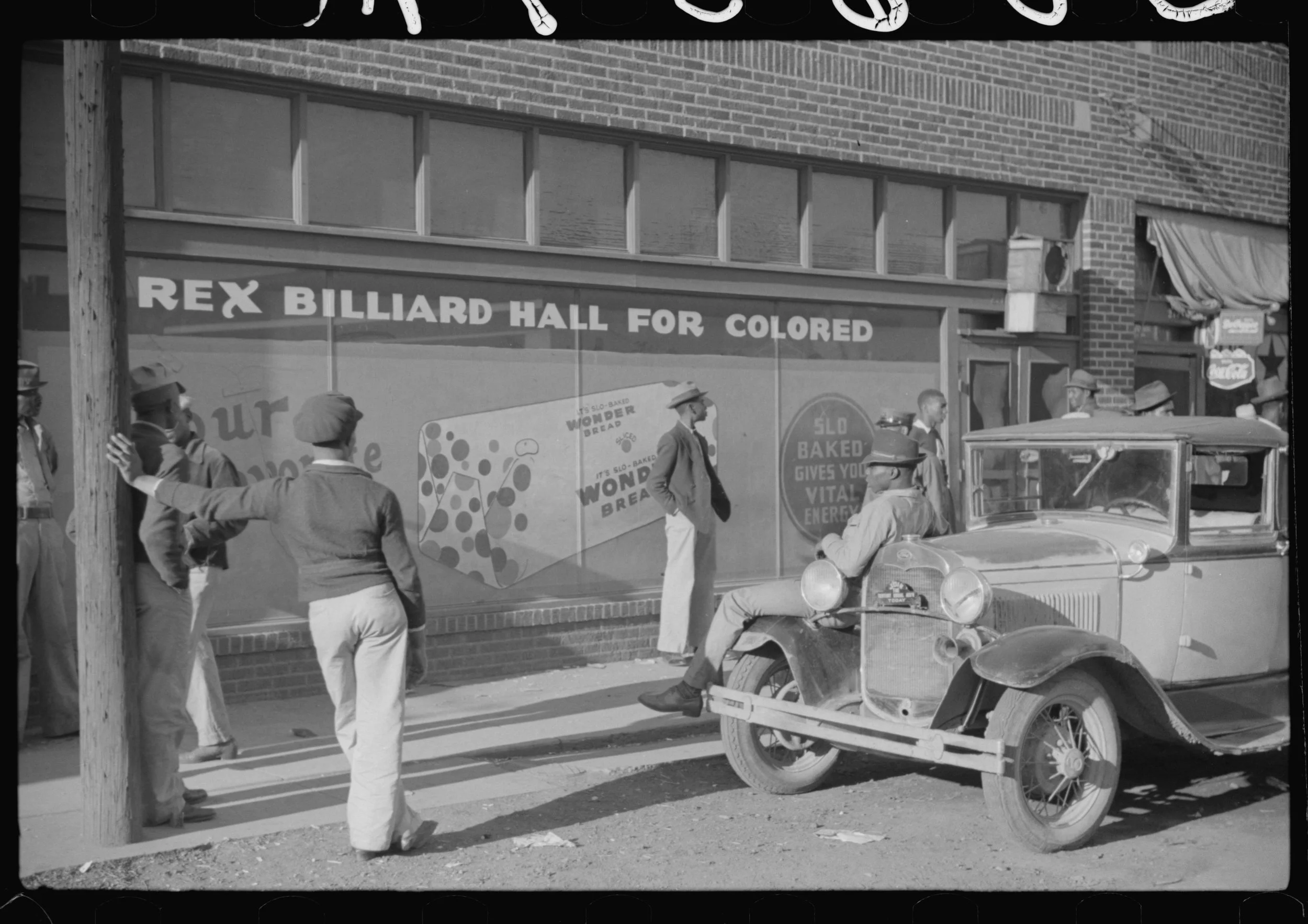
Photographer: Marion Post Wolcott, 1939. Credit Line: Library of Congress, Prints & Photographs Division, Farm Security Administration/Office of War Information Black-and-White Negatives
Durham, North Carolina's Hayti district provides a clear example. Before state prohibition in 1909, Hayti was a thriving Black business district with multiple Black-owned saloons serving as economic anchors. Within two years of prohibition enforcement, most of these establishments had closed, and the district's commercial activity had contracted significantly. SOURCE
The same pattern played out in Memphis's Beale Street district, Atlanta's Auburn Avenue, and Birmingham's Fourth Avenue. Prohibition enforcement deliberately targeted the Black-owned establishments that made these districts economically viable, while white commercial districts continued largely unaffected.
Eliminating Black Gathering Spaces
Beyond economics, prohibition served another crucial function for white supremacy: eliminating spaces where Black communities could gather without white supervision.
Black saloons functioned as community centers where Black people could meet, organize, discuss politics, plan economic strategies, and build collective power. These were spaces where Black political candidates met supporters, where labor organizers recruited members, where community leaders built consensus on responses to discrimination.
White authorities understood this threat clearly. When they described Black saloons as "dangerous," they weren't worried about alcohol—they were worried about Black people gathering and organizing. The same dynamic that made Black churches targets of white terrorism made Black saloons targets of prohibition enforcement.
Shutting down Black saloons meant forcing Black social life into more controllable spaces—homes, churches—that were either too small for significant organizing or already under some degree of white surveillance and control through white religious denominations and oversight.
The Economics of Destruction
The wealth destruction caused by prohibition enforcement in Black communities has never been adequately calculated, but the scale was enormous.
Consider: a successful Black saloon owner in 1906 Atlanta might own a building worth several thousand dollars (equivalent to hundreds of thousands today), maintain inventory worth hundreds of dollars, and generate weekly revenues that made him one of the wealthiest Black men in the city. When prohibition shut down his business, he lost all of that. The building became unsellable because saloons couldn't legally operate. The inventory was confiscated or became worthless. The revenue stream ended.
Multiply that by hundreds of Black saloon owners across the South, and you're looking at millions of dollars in Black wealth deliberately destroyed by prohibition enforcement. This wealth wasn't transferred—it was simply eliminated. And because Black entrepreneurs faced massive barriers to accessing capital for new businesses, many never recovered economically.
The intergenerational impact compounds this loss. Those Black saloon owners should have been able to pass their businesses and buildings to their children, creating generational wealth. Instead, prohibition converted their property into stranded assets and dead capital.
The National Expansion of the Strategy
When national Prohibition took effect in 1920, the Southern strategy of using alcohol laws to target Black businesses expanded nationwide. Northern cities with significant Black populations saw similar patterns of selective enforcement.
In Chicago, Detroit, Cleveland, and other cities where Black migrants had established thriving communities during the Great Migration, prohibition enforcement targeted Black speakeasies and blind pigs far more aggressively than white establishments. Black entrepreneurs who attempted to operate in the underground economy faced arrest and property seizure at rates dramatically higher than their white counterparts.
Even in cities without formal segregation, prohibition enforcement reinforced racial economic hierarchies. White speakeasy operators with political connections could operate with relative impunity. Black operators, lacking those connections and facing overtly racist enforcement, couldn't. SOURCE
The Klan's Role in Enforcement
The Ku Klux Klan's involvement in prohibition enforcement, particularly in targeting Black businesses, added a layer of terrorism to economic destruction. When Klansmen conducted raids as deputized prohibition agents, they weren't just enforcing alcohol laws—they were conducting racial terrorism with federal sanction.
Klan raids on Black establishments involved violence, property destruction, theft, and intimidation that went far beyond normal law enforcement. Black business owners reported Klansmen stealing money from registers, destroying property beyond what enforcement required, physically assaulting owners and patrons, and threatening further violence if businesses attempted to reopen. SOURCE
This combination of legal authority and extralegal violence made resistance nearly impossible. A Black business owner couldn't defend against a raid when the raiders had federal badges. They couldn't seek legal recourse when local authorities supported the Klan. They couldn't rebuild when the threat of further violence hung over any attempt.
The Legacy of Economic Destruction
When Prohibition ended in 1933, Black communities couldn't simply rebuild what had been destroyed. The Depression had further devastated Black economic capacity. Many of the Black business districts that prohibition enforcement had weakened didn't recover. The buildings that had housed Black saloons stood empty or were sold at distress prices to white buyers.
The Black entrepreneurs who might have rebuilt were gone—dead, bankrupted, or driven from the industry. The capital that should have been available for reinvestment had been destroyed. The commercial ecosystems that had supported Black business districts had collapsed.
This economic destruction contributed directly to the wealth gap that persists today. The Black saloon owners of 1906 to 1920 should have been able to build generational wealth, pass their businesses to their children, invest in their communities. Instead, prohibition enforcement destroyed their wealth and eliminated their businesses, setting their families back economically by generations.
Remembering What Was Lost
When we celebrate speakeasy culture today, we're romanticizing an era that was fundamentally about economic destruction and racial oppression. The same laws that created the underground economy we now find charming were used to systematically destroy Black economic power.
The Black-owned saloons that were shut down by prohibition weren't abstract casualties of well-intentioned temperance reform. They were deliberate targets of white supremacy, chosen specifically because they represented Black economic success and community power.
Understanding this history means recognizing prohibition not as a failed noble experiment, but as a successful campaign of economic warfare against Black communities. The wealth that was destroyed, the businesses that were shuttered, the gathering spaces that were eliminated—these losses weren't unfortunate side effects. They were the intended purpose.