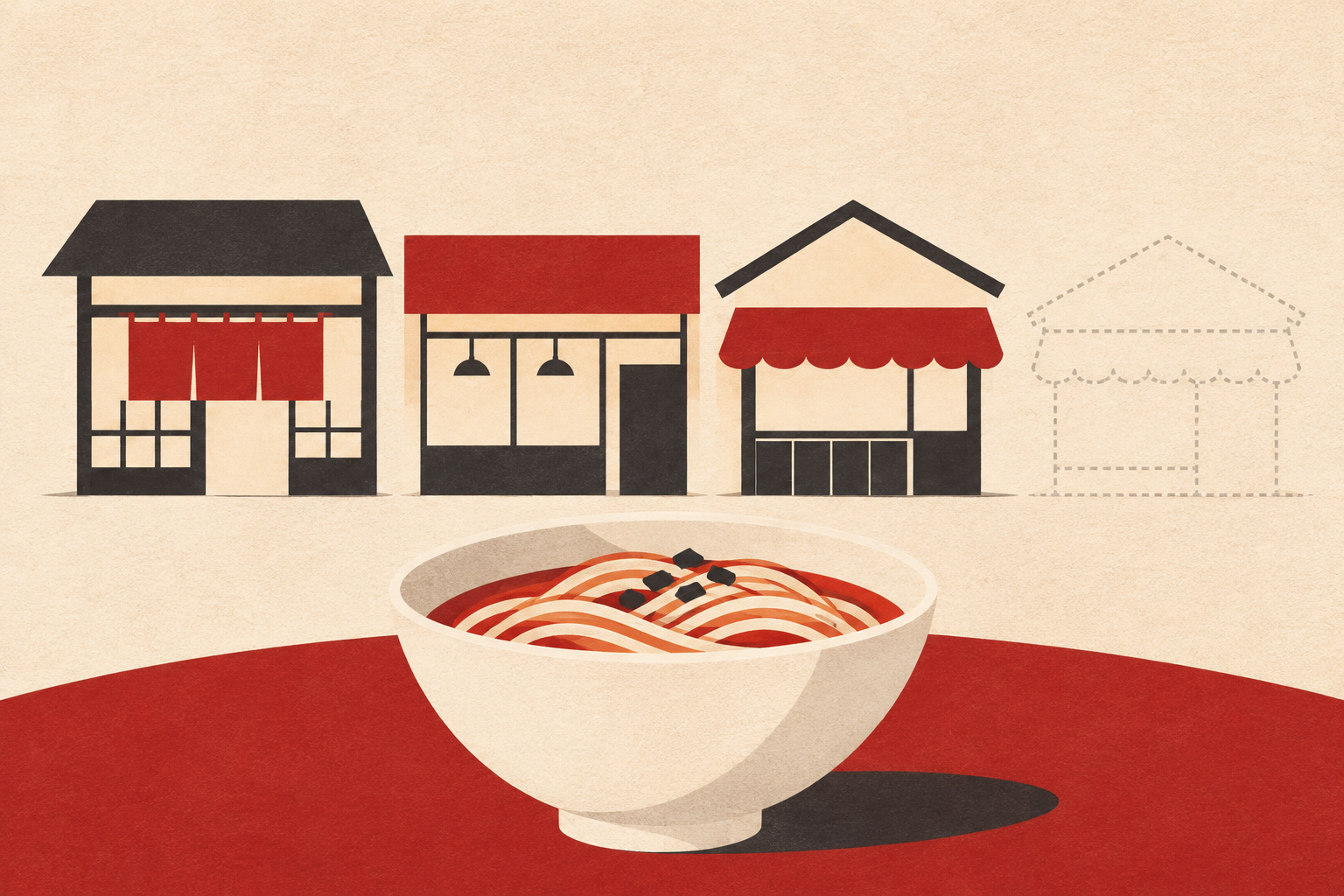
Noodles & Company is selling more at its comparable restaurants while operating a smaller business overall. Its November 13 earnings release reported a 9.5% increase in system-wide comparable sales for the third quarter, alongside a 1% decline in total revenue. Those figures describe different parts of the turnaround, and both matter to anyone trying to understand the chain’s direction.
In the company’s results for the quarter ended September 29, revenue reached $120.9 million. The net loss narrowed to $2.1 million from $9.2 million a year earlier. Comparable sales at company-owned restaurants increased 10.7%; franchised locations posted a 4.9% gain. These are year-over-year comparisons, not changes from the preceding quarter.
Nation’s Restaurant News reported that traffic at company-owned restaurants grew 7.8% and that 14 restaurants closed during the quarter. Management described customers shifting from closed restaurants to nearby locations, helping the remaining stores generate more sales. The trade publication also highlighted the role of the ramen menu in the company’s broader recovery effort.
That transfer of business is an important distinction. A stronger surviving restaurant does not necessarily mean the chain has reached more neighborhoods or added more customers across its entire network. For a diner, a closure can mean a longer journey even as the nearest remaining location becomes busier. Comparable sales are useful, but they cannot describe that experience alone.
The financial picture also remains unfinished. The company reported $101 million in outstanding debt at quarter-end and said a November 12 credit amendment extended maturity to November 30, 2027. Its strategic review remains underway. The release does not announce a completed sale or a guaranteed outcome for that process.
For restaurant operators, the lesson is to read store productivity alongside the size of the estate. Eliminating weaker locations can improve the economics of those left behind, but sustaining that improvement still requires a reason for guests to return. Noodles’ next results will help show whether the smaller footprint continues to support healthier operations. Follow more restaurant developments in Brunch God’s Industry News.