Subway Purchasing Co-op Ex-CEO Charged in Alleged $80M Scheme
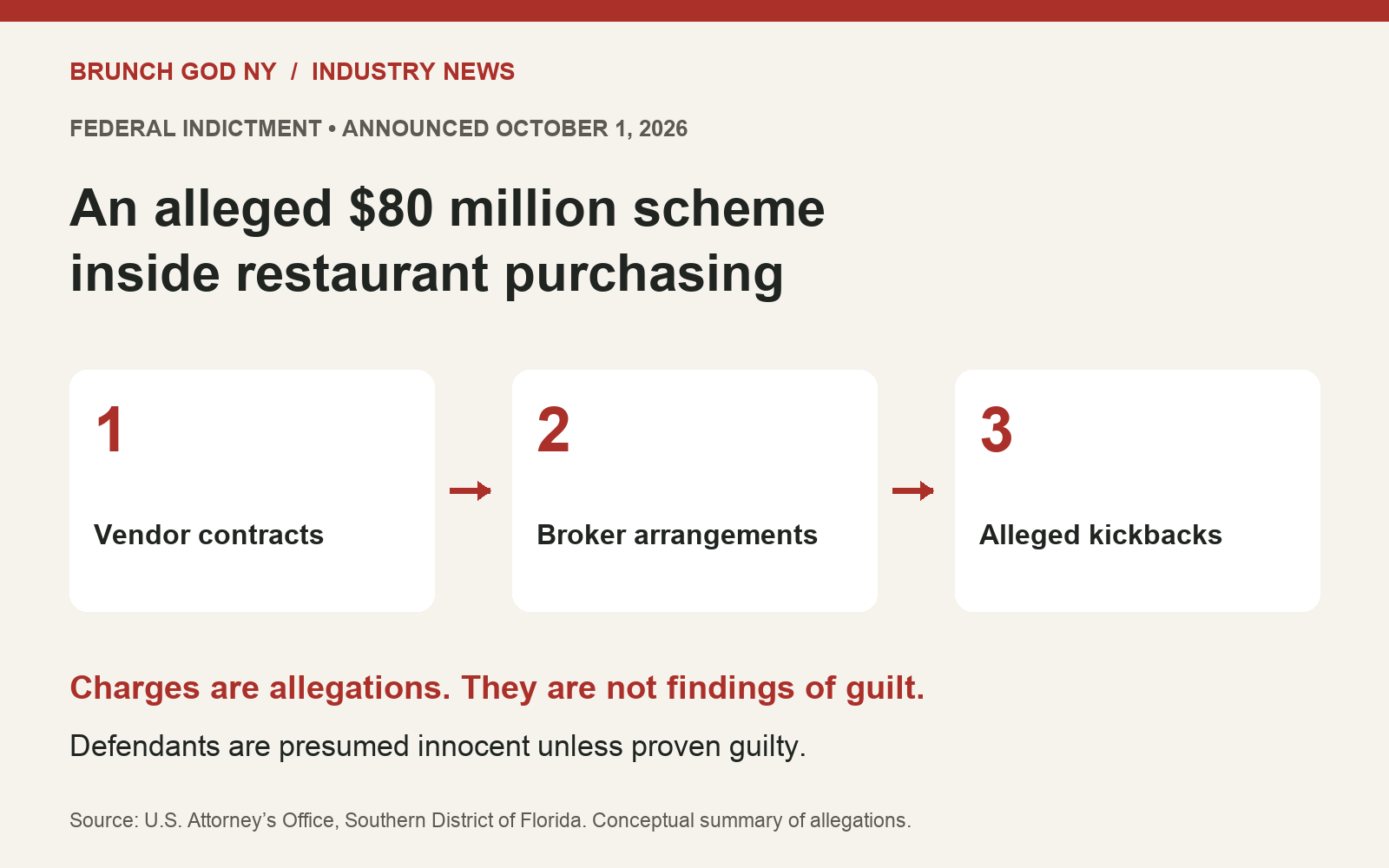
Federal prosecutors announced an indictment on October 1, 2026, alleging a bribery and money-laundering scheme that defrauded thousands of sandwich-shop franchisees of more than $80 million. The defendants are Janet Risi Field, former chief executive of Independent Purchasing Cooperative, and her brother, Steven Louis Risi.
According to the Justice Department’s release, vendors seeking supply contracts allegedly paid secret bribes and kickbacks through arrangements involving brokers. Prosecutors say the contracts affected prices franchisees paid for food and supplies. These are allegations, not findings of guilt; the defendants are presumed innocent unless proven guilty.
The federal release refers to the restaurant brand as Restaurant Chain-1. Nation’s Restaurant News identifies the cooperative as Subway’s purchasing organization. The distinction matters: the charges concern the named defendants, and do not establish wrongdoing by every franchisee, vendor or the restaurant brand.
Why a supply contract belongs in the food conversation
The Brunch God view: a restaurant’s economics begin well before food reaches the kitchen. Purchasing arrangements determine which ingredients operators can buy and what they pay. Guests see a sandwich price; operators also face the less visible decisions inside sourcing and distribution.
The case raises questions about how a purchasing organization demonstrates that contracts serve its members. Useful questions include who receives broker fees, how potential conflicts are disclosed and who independently reviews a supplier arrangement. Those questions are relevant to oversight even while the criminal allegations remain unresolved.
What the headline cannot tell you
The alleged amount does not establish how much any particular diner paid extra for a meal. It is not evidence that a specific product was unsafe or that a particular restaurant owner participated. Readers should resist turning a charge about purchasing conduct into claims about food quality or every shop in a chain.
For operators, the story highlights the value of understandable invoices and clear explanations of contract terms. For diners, it is a reminder that a familiar sign above the door can sit over a complicated network of independent businesses.
The next meaningful developments are the defendants’ responses and proceedings in court. Until those facts emerge, the accusation and the outcome must remain separate.